

The Workplace Transformation
The global shift towards remote and hybrid work models, catalysed by the COVID-19 pandemic, has the potential to reshape our environmental impact significantly. Drawing insights from a recent study published in the Proceedings of the National Academy of Sciences, we delve into the greenhouse gas emissions of this transition and the broader implications for businesses and individuals.
The study highlights that switching from an on-site working model to a fully work-from-home (WFH) structure in the United States could reduce up to 58% of the carbon footprint from working. In contrast, hybrid workers (those working remotely only part-time) see a lesser reduction. One day of remote work a week only lessens emissions by 2%, but working remotely two or four days a week can lead to a decrease of up to 29%. Factors considered in this estimation include the use of information and communication technology, commuting behaviours, non-commute travel, and energy consumption in both offices and homes. Notably, while the carbon footprint implications of IT usage are negligible, there’s significant emphasis on the effects of office energy usage and non-commute travel.
Insights
Potential vs. Realisation: Remote work undoubtedly showcases the potential to drive down carbon emissions, but realising these benefits necessitates careful planning and trade-offs. Properly setting up one’s lifestyle, from vehicle choice to travel behaviours and even home and office environments, is crucial.
Congestion and Fuel Economy: One of the immediate benefits of WFH is the alleviation of traffic congestion during peak hours in high-density commuting zones. This can lead to improved fuel economy, contributing to climate change mitigation.
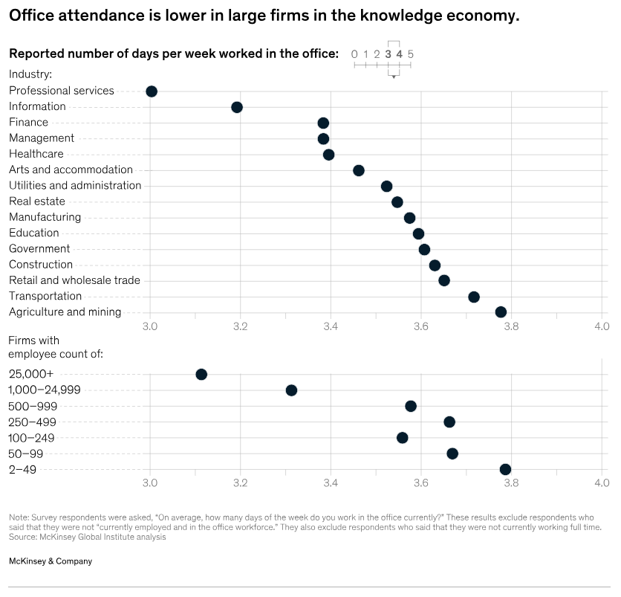
The Dark Side of the WFH Boom: The pandemic prompted many business service workers to move from high-density commuting zones to more rural, low-density areas. This shift, while beneficial for personal reasons, could lead to longer commutes for hybrid workers. The result? An increased carbon footprint due to the greater reliance on private vehicles, especially in areas with limited access to mass transit.
Home Space and Energy Consumption: Remote work often requires dedicated spaces at home. This can lead to increased residential energy consumption, potentially boosting greenhouse gas emissions for remote and hybrid workers. Furthermore, the study highlighted that households engaged in remote work tend to own more vehicles. If this correlation is due to remote work, then vehicle manufacturing and maintenance, coupled with low vehicle occupancy rates, could escalate emissions further.
Non-Commute Travel: While remote work eliminates daily commutes, it doesn’t necessarily mean individuals are traveling less. The study suggests that the benefits of reduced greenhouse gas emissions remain, even with the increase in non-commute-related travel. Interestingly, remote workers, compared to on-site counterparts, show a smaller increase in driving but a more significant rise in air travel.
The Link to Reduced Carbon and Transport
Transport carbon, especially the emissions resulting from daily commuting, stands out as a crucial metric in this study. The greenhouse gases produced from daily commutes play a significant role in an individual’s total carbon footprint. As remote work reduces or even eliminates daily commuting for some, the potential for large-scale emission reduction becomes evident.
The findings emphasise the need for businesses and policymakers to pay close attention to this metric. By understanding and addressing transport carbon, we can make better-informed decisions about urban planning, infrastructure investments, and organisational policies.
The ultimate takeaway? Businesses should re-evaluate their office spaces, focusing on energy efficiency, adopting renewables for office utilities, and exploring the potential of shared office spaces.